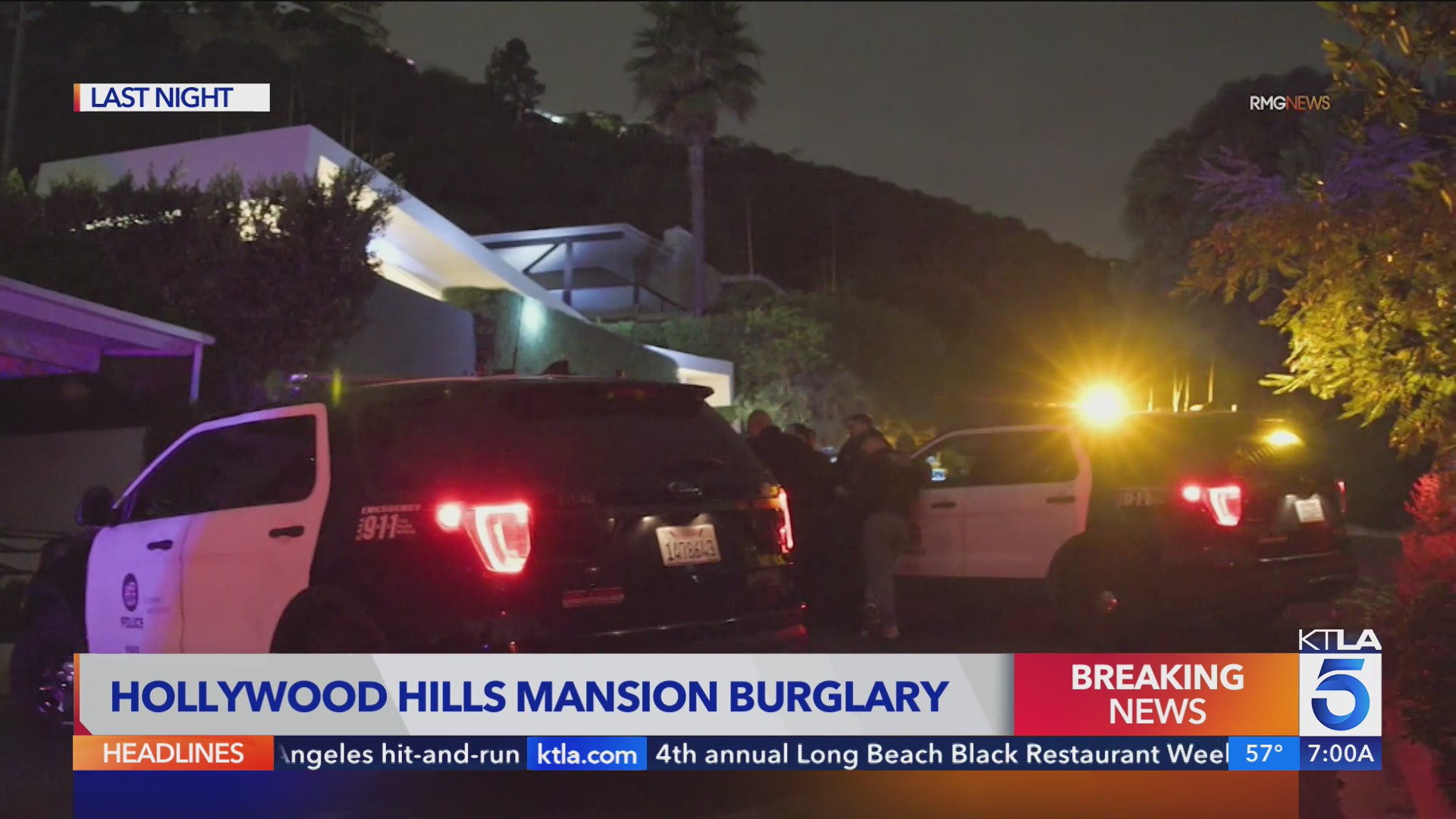
A shattered skylight. A silver-haired woman trembling in her robe. Police lights flashing across the manicured lawns of a secluded Hollywood Hills estate—this wasn’t a scene from a crime thriller. It was real. And it involved one of the last living heirs to the Budget Rent a Car fortune, now in her late 80s and living quietly away from the public eye—until armed thieves breached her gates and turned her sanctuary into a crime scene.
This wasn’t just another celebrity break-in. It was an attack on a vulnerable elder, a symbol of old Hollywood wealth, and a stark reminder that even the most fortified homes aren’t immune. As details emerge, the incident raises urgent questions about personal security, the risks of high-profile inheritance, and the evolving tactics of modern burglars.
The Night the Mansion Was Breached
Just after 2 a.m., motion sensors were triggered inside the sprawling, gated property on Outpost Drive. By the time the homeowner—identified as Eleanor Voss, 87, granddaughter of Morris Mirkin, who helped build Budget into a national brand—reached the hallway, three masked figures were already inside.
According to police reports, the intruders entered through a rear service entrance after disabling a secondary alarm system. Surveillance footage later showed them using bolt cutters on a side gate, bypassing a less-monitored corner of the estate’s perimeter. They moved quickly, ransacking the master bedroom and a private study believed to house family memorabilia, vintage jewelry, and possibly cash.
When Voss confronted them, one suspect shoved her to the floor. She sustained a minor concussion and bruises but refused immediate hospitalization. “She was shaken but coherent,” said a first responder. “What she kept saying was, ‘They took my mother’s watch.’”
Who Is Eleanor Voss?
The name Mirkin once carried weight in Los Angeles business circles. Morris Mirkin, Eleanor’s grandfather, wasn’t just a Budget co-founder—he was a real estate investor, car dealership owner, and self-made millionaire by the 1970s. His daughter, Claire Mirkin (Eleanor’s mother), married into the Voss banking family, further consolidating wealth.
But Eleanor never sought the spotlight. While her cousins made headlines for lavish parties or philanthropy, she lived a reclusive life. Since the early 2000s, she’s been seen only at local farmer’s markets or church events. Her mansion, once a hub for industry mixers, became a quiet retreat—its value now estimated at over $4.2 million due to location alone.
Her low profile likely made her seem like a soft target. But more than that, her age and isolation made her especially vulnerable.
Why Hollywood Hills Is a Magnet for Burglaries
The hills above Los Angeles have always drawn criminals. The concentration of wealth, often in isolated homes with limited oversight, makes them ideal targets. But in recent years, the pattern has shifted.

Where once burglars focused on stealing cash, electronics, or jewelry during off-hours, today’s intruders are more organized, often scouting homes for weeks. Some use social media to track when residents are traveling. Others pay local workers for intel on security systems.
Hollywood Hills, with its twisty roads, uneven patrolling, and mix of aging estates and new ultra-luxury homes, is especially susceptible. LAPD data shows a 22% increase in residential burglaries in the area over the past five years. Of those, 14% involved occupants being present—a rare but dangerous escalation.
Eleanor Voss’s case fits a growing trend: high-net-worth elderly homeowners targeted not just for valuables, but because they’re perceived as less likely to resist or remember details.
“There’s a disturbing calculus happening,” says retired LAPD detective Alan Meeks. “Older residents often live alone, may not have the latest security, and are less likely to fight back. Thieves are counting on that.”
The Security Failures That Made It Possible
No home is 100% safe. But a forensic review of the Voss estate’s setup reveals critical oversights common among long-term homeowners:
- Outdated alarm system: While the main gate had a monitored alarm, the rear gate relied on a mechanical lock, easily cut.
- Blind spots in surveillance: Cameras covered the front drive and front door but missed the side service entrance.
- No panic button in bedrooms: Voss had to walk to a downstairs console to alert authorities—valuable time lost.
- Limited lighting: Motion lights were installed, but poorly maintained. One pole near the rear gate had been non-functional for months.
These aren’t minor glitches. They represent a gap many aging homeowners face: the cost and complexity of upgrading security in a rapidly evolving threat landscape.
Even with a $4 million home, Voss’s defenses hadn’t kept pace with modern burglary tactics. As one security consultant put it: “You can have a Rolls-Royce gate, but if the garage door is unlocked, the car’s still gone.”
What Thieves Likely Took—and Why
Initial reports suggest the suspects carried off no more than two duffel bags. That implies selectivity, not a smash-and-grab. Among the missing:
- A 1940s Cartier platinum wristwatch (belonging to Voss’s mother)
- A small collection of vintage Rolex watches
- A safe containing family documents and possibly bearer bonds
- An unframed oil painting by an early California impressionist
Notably absent: electronics, smart devices, or newer valuables. This wasn’t about cash or resale. It was personal and symbolic.
“These weren’t smashers after flat-screens,” says art crime investigator Lena Cho. “They knew what they were after. That watch? It’s not just jewelry—it’s a family heirloom with emotional and black-market value.”
There’s also speculation that insider knowledge played a role. Voss had employed the same housekeeper for over two decades and recently dismissed a pool technician for “suspicious behavior.” Police are reviewing service staff backgrounds.
The Psychological Toll of Home Invasion
Being robbed is traumatic. Being attacked in your own home—especially at 87—is life-altering.
Voss has since moved to a private residence outside LA, reportedly under 24/7 protection. Friends say she’s withdrawn, reluctant to speak about the incident. “She told me the house doesn’t feel like hers anymore,” said a close acquaintance. “Even if they fix the walls, the fear stays.”
Therapists who work with elderly crime victims describe a common aftermath: hypervigilance, sleeplessness, and a loss of autonomy. Many stop driving, avoid answering doors, or leave their homes entirely.
For someone like Voss—already reclusive—the burglary may have deepened her isolation. And that’s a hidden cost that doesn’t show up in police reports.
How Wealthy Elders Can Protect Themselves
This case isn’t unique. From Bel-Air to Brentwood, aging heirs and legacy families are increasingly targeted. But protection isn’t just about more locks—it’s about smarter systems and human awareness.
Here’s what experts recommend:
- Upgrade to monitored, AI-powered surveillance: Systems like Verkada or Google Nest Aware use motion tracking and facial recognition to distinguish between family, staff, and intruders.
- Install panic buttons in every bedroom and bathroom: Silent alarms that go straight to police or private security can save critical seconds.
- Rotate staff and conduct background checks: Long-term loyalty doesn’t guarantee safety. Regular vetting is essential.
- Avoid predictable routines: Sharing daily walks, grocery trips, or church visits online—or with staff—can make patterns easy to exploit.
- Create a “safe room” with independent communication: A fortified interior room with a landline, camera, and emergency kit can be a lifeline during an intrusion.
- Work with private threat assessors: Firms like Gavin de Becker & Associates specialize in evaluating personal risk for high-profile or vulnerable individuals.
The goal isn’t paranoia—it’s preparedness. As one security architect told us: “You’re not protecting a house. You’re protecting a life.”
A Warning to the Privileged and the Invisible
Eleanor Voss’s story is not just about a burglary. It’s about invisibility. She lived quietly, avoided fame, and thought her seclusion was protection. But in a city obsessed with wealth and legacy, silence can be misread as weakness.
This attack should serve as a warning—not just to the rich, but to anyone who assumes safety comes with a gate and a view. Modern criminals are adaptive, patient, and often emboldened by the belief that their victims won’t fight back.
Upgrading security isn’t a luxury. It’s a necessity. And for aging heirs, recluses, or anyone living alone in a high-value home, it’s not enough to own a fortress. You have to maintain it, monitor it, and never assume you’re off the radar.
Act now. Audit your home. Talk to experts. Because the next break-in might not just steal a watch—it could steal your sense of safety forever.
FAQ
What should you look for in Thieves Target Aging Budget Rental Car Heiress in Hollywood Hills Home I? Focus on relevance, practical value, and how well the solution matches real user intent.
Is Thieves Target Aging Budget Rental Car Heiress in Hollywood Hills Home I suitable for beginners? That depends on the workflow, but a clear step-by-step approach usually makes it easier to start.
How do you compare options around Thieves Target Aging Budget Rental Car Heiress in Hollywood Hills Home I? Compare features, trust signals, limitations, pricing, and ease of implementation.
What mistakes should you avoid? Avoid generic choices, weak validation, and decisions based only on marketing claims.
What is the next best step? Shortlist the most relevant options, validate them quickly, and refine from real-world results.