
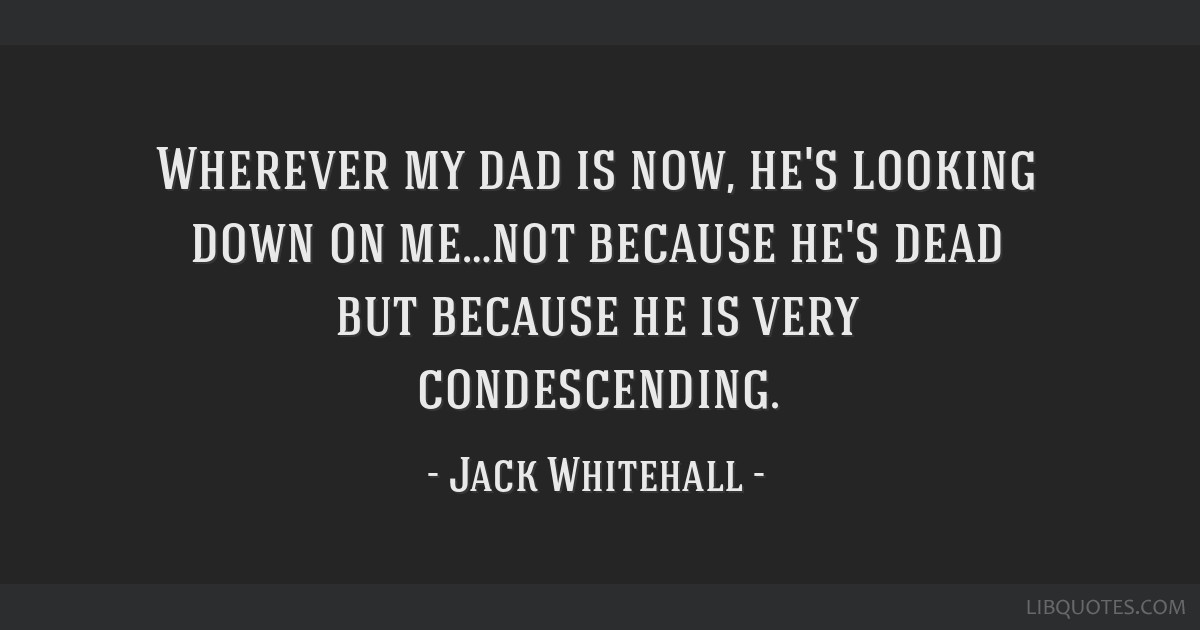
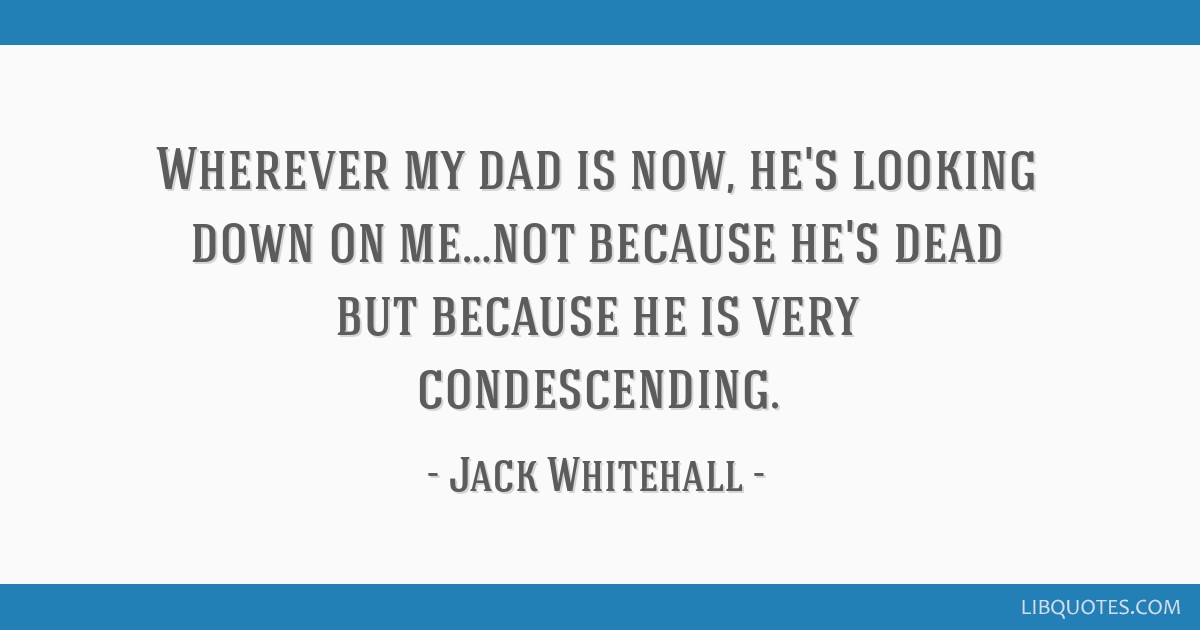
Jack Whitehall’s quote — “I’m sure wherever my dad is, he’s looking down on us. He’s not dead, just very” — is classic Whitehall: layered with irony, delivered with impeccable timing, and packed with more truth than the average motivational poster. It’s not just a punchline. It’s a mirror held up to family dynamics, workplace behavior, and the masks we wear in modern life. While often shared as a “quote of the day” for its comedic value, this line opens a door to deeper conversations about honesty, emotional presence, and the quiet absurdities of work culture and human nature.
This isn’t just a throwaway gag. It’s a cultural snapshot — one that resonates because it’s uncomfortably real.
The Comedy of Emotional Distance — And Why It Lands
Whitehall’s quote thrives on the tension between what’s said and what’s meant. “Looking down on us” typically implies a deceased loved one watching from the afterlife. But the twist — “He’s not dead, just very” — deflates the sentimentality with dry British wit. It implies his father is present, but emotionally or physically distant — perhaps indifferent, disengaged, or simply checked out.
This kind of humor works because it’s rooted in universal experience. How many of us have felt the emotional absence of someone physically present? A parent at the dinner table scrolling on their phone. A manager in a meeting who’s mentally already on vacation. A colleague who’s “here,” but not really here.
Real-world example: Imagine a team leader who attends every meeting but never contributes, offers no feedback, and disappears after sending a vague email. Employees might joke, “Well, at least he’s not dead — just very… absent.” That’s Whitehall’s joke, transplanted into office culture.
The brilliance is in the understatement. The UK’s comedic tradition — from Fawlty Towers to The Office — runs on this type of restraint. Emotion is buried under politeness, and truth leaks out in awkward pauses and backhanded compliments.
Honesty Through Satire — The Subversive Truth-Telling
Whitehall’s comedy often masquerades as self-deprecation, but it’s really a form of honest critique. In his travel specials with his father, Michael, he highlights generational differences, emotional repression, and social awkwardness — all under the guise of “lads on tour” content. But beneath the sight gags and cringe humor lies a quiet indictment of British stoicism.
The quote reflects this pattern: It’s not just funny — it’s a subtle call for authenticity.
In work culture, especially in hierarchical or traditional environments, honesty is often punished. People sugarcoat feedback, avoid conflict, and pretend everything is fine. But as Whitehall’s joke shows, everyone knows when someone is “not dead, just very” disengaged. The real issue isn’t the absence — it’s the refusal to acknowledge it.
Common workplace mistake: Leaders who think visibility equals presence. Showing up to meetings doesn’t demonstrate leadership if you’re not mentally present, engaged, or contributing meaningfully.
Whitehall’s humor encourages us to call out these disconnects — not with aggression, but with wit. Satire becomes a safer way to voice uncomfortable truths.
Work Culture Lessons: Presence Over Performance
Many leadership workshops focus on productivity, KPIs, and delegation. But Whitehall’s quote points to something more fundamental: emotional availability.
In modern work culture, especially post-remote work, “presence” has become fragmented. Hybrid schedules, Slack pings, and endless Zoom calls create an illusion of connection. But true presence — listening, responding, being in the moment — is rare.
Jack Whitehall’s dynamic with his father is a masterclass in this. Michael often appears stiff, reserved, emotionally unequipped. Jack, in contrast, is overtly expressive — even if it’s through sarcasm. Their interactions reveal how poor emotional modeling in one generation affects the next.
Practical application in leadership: - Are your team members speaking to you or just at you? - Do you respond to messages thoughtfully, or with one-word replies? - In meetings, are you multitasking, or fully listening?
The “just very” part of the quote applies to half-hearted leadership. It’s not about being perfect — it’s about being present. Employees don’t expect constant enthusiasm. They do expect authenticity.
A manager who admits, “I’m not great at this,” or “I need help processing this feedback,” earns more respect than one who pretends to have it all together — while clearly not.
Human Nature and the British Stiff Upper Lip
The quote also taps into a broader cultural trait: emotional repression. The British “stiff upper lip” ideal — keeping feelings under control, especially in public — still lingers in workplaces, families, and social interactions.
Whitehall’s comedy dissects this. His father, a product of that culture, often struggles to express affection or vulnerability. Jack, raised in a more open era, prods at these walls with humor — not malice, but curiosity.
This repression affects work culture in subtle ways: - Fear of giving negative feedback - Avoiding difficult conversations about mental health - Leaders who never admit mistakes - Teams that don’t build psychological safety
But humor, like Whitehall’s, can be a Trojan horse for emotional breakthroughs. When we laugh at the absurdity of “He’s not dead, just very…”, we’re also acknowledging how ridiculous it is to equate silence with strength.
Limitation of humor in the workplace: While satire can highlight issues, it can’t fix systemic problems alone. A culture that relies on sarcasm to cope with dysfunction is still dysfunctional. The goal isn’t just to laugh — it’s to change.
From Comedy to Connection — Building Authentic Culture
The most effective teams aren’t the loudest or most energetic — they’re the ones where people feel safe to be real. Whitehall’s quote, when applied beyond comedy, becomes a challenge: How present are we — really?
You don’t need to be a comedian to use humor as a tool. But you do need courage to be honest.
Actionable tips for leaders and teams: - Replace performative check-ins (“How’s it going?”) with specific questions (“What’s one thing draining your energy this week?”) - Normalize imperfection — share your own struggles when appropriate - Use light humor to break tension, but follow up with real dialogue - Audit meeting participation: Are the same people dominating? Are others checked out? - Encourage “no camera” days in virtual meetings to reduce performance fatigue
Just as Jack uses comedy to bridge the gap with his father, teams can use honesty — wrapped in respect and sometimes humor — to build trust.
Why This Quote Resonates in the Digital Age
We’re more “connected” than ever — yet loneliness and disengagement are at record highs. Social media creates the illusion of presence, much like showing up to a meeting and saying nothing. We’re all guilty of being “not dead, just very…” — scrolling, distracted, emotionally elsewhere.
Whitehall’s joke cuts through that noise. It’s a reminder that real connection requires effort. It’s not enough to be alive in the room. You have to be in the room.
In a world of curated LinkedIn posts and polished personal brands, this quote stands out because it’s unpolished. It’s honest. It’s human.
And that’s why it keeps circulating as a “quote of the day.” It’s not inspirational in the cliché sense. It’s insightful. It sees us — the distracted parent, the checked-out employee, the leader faking confidence — and says, Yeah, I see you. And it’s kind of ridiculous, isn’t it?
Jack Whitehall’s “I’m sure wherever my dad is, he’s looking down on us. He’s not dead, just very” isn’t just a punchline. It’s a cultural critique wrapped in a dad joke. Use it not just for a laugh, but as a prompt: Where in your life are you physically present but emotionally absent? And what would it look like to truly show up?
FAQ: What is the real meaning behind Jack Whitehall’s “not dead, just very” quote? It’s a satirical take on emotional absence — highlighting when someone is physically present but mentally or emotionally disengaged.
How does Jack Whitehall use humor to discuss family dynamics? He uses irony and self-deprecation to expose generational differences, emotional repression, and the awkwardness of parent-child relationships.
Can humor improve workplace honesty? Yes — when used appropriately, humor can break down barriers and make difficult conversations easier, especially around vulnerability and feedback.
What can leaders learn from this quote? Leaders should focus on genuine presence, not just visibility. Being “in the room” isn’t enough — engagement and emotional availability matter.
Is Jack Whitehall’s comedy based on real life? Much of his material, especially his travel series with his father, is drawn from real experiences, blending scripted comedy with authentic interactions.
How does British culture influence Whitehall’s humor? His comedy reflects British traits like understatement, irony, and emotional restraint — often using awkwardness to explore deeper truths.
Why do quotes like this go viral as “quote of the day” content? They combine humor with relatability, offering a quick laugh while touching on shared human experiences like family, work, and emotional disconnection.
FAQ
What should you look for in Jack Whitehall's Quote of the Day: Humor, Honesty, and Human Truths? Focus on relevance, practical value, and how well the solution matches real user intent.
Is Jack Whitehall's Quote of the Day: Humor, Honesty, and Human Truths suitable for beginners? That depends on the workflow, but a clear step-by-step approach usually makes it easier to start.
How do you compare options around Jack Whitehall's Quote of the Day: Humor, Honesty, and Human Truths? Compare features, trust signals, limitations, pricing, and ease of implementation.
What mistakes should you avoid? Avoid generic choices, weak validation, and decisions based only on marketing claims.
What is the next best step? Shortlist the most relevant options, validate them quickly, and refine from real-world results.