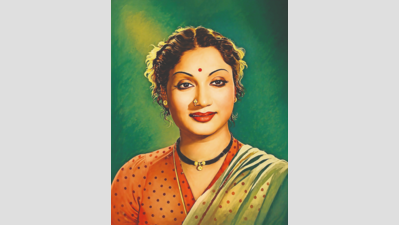
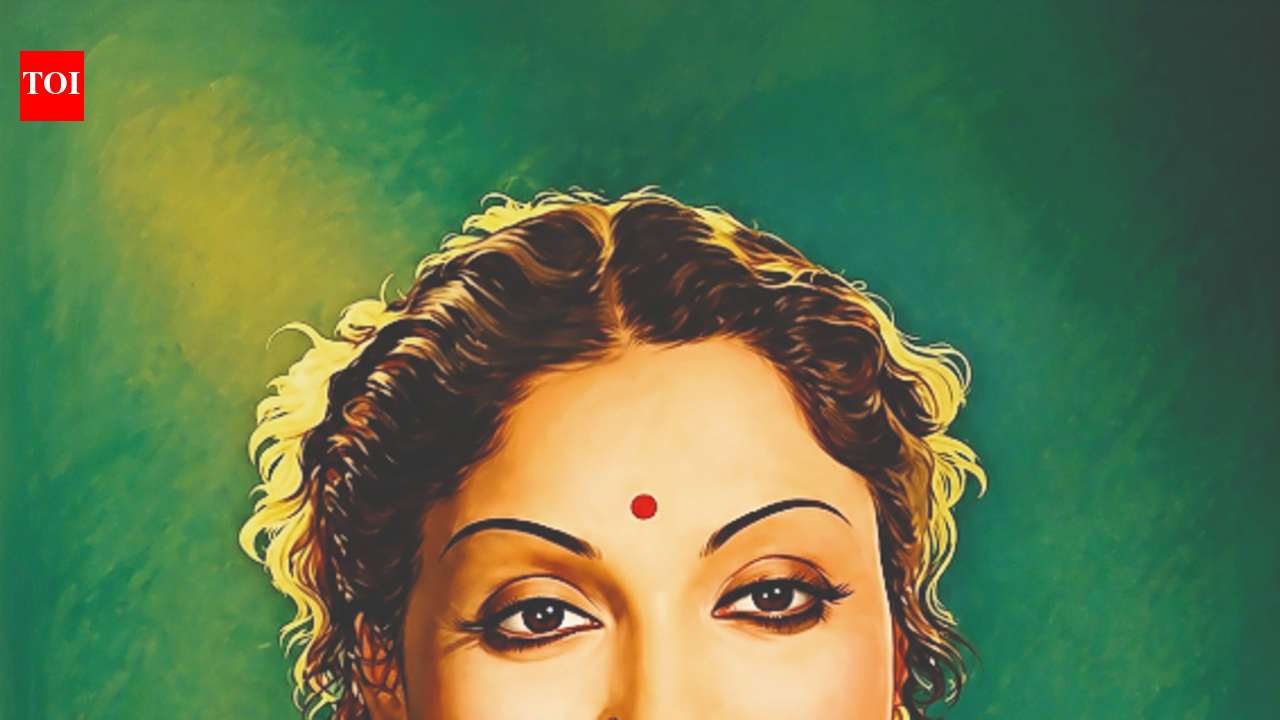
She didn’t charm with a demure smile or win hearts through romantic idealism. G Varalakshmi entered the frame with fire in her eyes, a voice that commanded attention, and a presence that refused to be sidelined. In an era when Tamil cinema celebrated passive heroines draped in tradition, she stood defiant—an unapologetic, rowdy force who redefined what it meant to be a woman on screen.
Her performances weren’t just memorable; they were disruptive. Whether roaring in courtroom dramas, mocking patriarchy in social satires, or dominating ensemble casts with sheer will, G Varalakshmi wasn't playing by the rules. She rewrote them.
A Star Forged Outside the Norm
G Varalakshmi didn’t emerge from the polished corridors of classical dance or elite theater. She came from a world where survival was performance—literally. Her early years were steeped in drama troupes, where actors toured villages, delivering raw, unfiltered stories under open skies. These weren’t sanitized productions; they were visceral, confrontational, and packed with social commentary.
It was this background that shaped her. When she transitioned to film, she brought the same intensity—no melodrama, no artificial restraint. Her acting lacked the softness studios wanted in heroines, which should have been a career killer. Instead, it became her signature.
She wasn’t cast as the love interest. She wasn’t the tragic mother or innocent daughter. She played lawyers, politicians, rebels, and schemers—roles typically reserved for men. And she didn’t just fill them; she owned them.
Redefining Female Power in 1950s Tamil Cinema
The 1950s Tamil film industry was still navigating its identity. While reformist themes were gaining traction—caste critique, women’s rights, education—on-screen representation lagged. Female characters were largely symbolic: either virtuous victims or seductive villains. There was little room for complexity.
G Varalakshmi shattered that binary.
In Thirumbi Paar (1953), she played a fiery woman challenging corrupt systems, delivering monologues that cut like a blade. Her dialogue wasn’t poetic—it was direct, urgent, and politically charged. Audiences weren't just watching a character; they were hearing a voice they rarely got to see represented.
She didn’t wait for permission to be powerful. On-screen, she argued, commanded, and led. Off-screen, she became a symbol for women who refused to be silent.
Why the "Rowdy" Label Stuck
The press called her “rowdy”—not as an insult, but as a reluctant acknowledgment of her ferocity. In a time when female assertiveness was pathologized, calling a woman "rowdy" was a way to dismiss her authority. But G Varalakshmi reclaimed the term.
Her "rowdiness" wasn’t chaos. It was clarity. It was the refusal to accept marginalization. When male co-stars delivered impassioned speeches, they were called passionate. When she did the same, it was labeled disruptive. Yet audiences responded.
She didn’t soften her edges to fit in. Instead, she made her edges the point.
Signature Roles That Changed the Game
Some actors gain fame through one breakout role. G Varalakshmi did it repeatedly—across genres, decades, and evolving social landscapes.
Parasakthi (1952) – The Firebrand Lawyer
Though her screen time was limited, her courtroom scene in Parasakthi remains iconic. As a female lawyer dismantling patriarchal justifications in a conservative society, she didn’t plead—she prosecuted. Her character wasn’t there to support the male lead; she was there to expose systemic injustice.
The script, penned by M. Karunanidhi, was revolutionary. But it was G Varalakshmi’s delivery—the crisp diction, the unflinching gaze—that made the scene land like a thunderclap. Audiences were stunned. A woman, speaking law, logic, and fury in equal measure?
This wasn’t just cinema. It was a cultural intervention.
Manthiri Kumari (1950) – The Rebel Princess
Long before feminist revisionism entered mainstream storytelling, Manthiri Kumari presented a royal woman who chose agency over obedience. G Varalakshmi played her confidante—a role that could have been ornamental. Instead, she became the moral backbone, challenging decisions, questioning authority, and refusing to be complicit.
Her performance was a quiet revolution. No song numbers. No romantic subplot. Just unwavering conviction.
Ratha Kanneer (1954) – The Voice of Reason
In this controversial film about morality and hypocrisy, G Varalakshmi played a woman who sees through society’s double standards. Her monologue about judging women for survival while excusing men for exploitation went viral—decades before “viral” existed.
Censors tried to cut it. Public outcry saved it.
That moment encapsulated her career: a woman speaking truth, threatened by those in power, and protected only by the people who heard her.
The Craft Behind the Controversy
G Varalakshmi’s power wasn’t just in her roles—it was in her method. She didn’t rely on makeup, costumes, or dramatic lighting. Her strength was in precision.
- Dialogue delivery: Every word was weighted. She spoke like someone used to being ignored—and therefore determined to be heard.
- Body language: Minimal but potent. A raised eyebrow, a step forward, a pause before a rebuttal—each gesture carried narrative weight.
- Emotional restraint: Unlike many of her contemporaries, she rarely wept on screen. Her pain was channeled into action, not spectacle.
She understood that in a male-dominated industry, emotionality was often used to disempower women. So she weaponized rationality.
Common Mistakes Modern Actors Make (And How She Avoided Them)
Many performers today mistake volume for power. They shout, cry, or dominate scenes through sheer screen time. But G Varalakshmi showed that real authority comes from conviction.
- Mistake: Overacting to “prove” intensity.
- Her approach: Silence as a tool. She often let her lines sink in with a pause—making the audience lean in, not look away.
- Mistake: Seeking audience sympathy.
- Her approach: Demanding respect. She didn’t want pity; she wanted accountability.
- Mistake: Conforming to genre expectations.
- Her approach: Subverting them. Even in melodramas, she resisted the “suffering woman” trope.
Why She Was Never Mainstream—And Why That Was Her Strength
Despite her impact, G Varalakshmi never became a commercial “top-billed” actress. She didn’t headline love stories or play the heroine in family dramas. Studios didn’t know how to market her.
And that was the point.
She operated outside the star system. She wasn’t selling fantasy. She was offering confrontation.
While actresses like Savitri or Padmini became icons of grace and beauty, G Varalakshmi became something rarer: a symbol of resistance. She didn’t need box office numbers. Her legacy wasn’t measured in tickets sold, but in doors opened.
Later generations of strong female performers—from Revathi to Aishwarya Rajesh—stand on ground she helped fracture and rebuild.
The Cultural Ripple Effect
Her influence extended beyond film. In the 1950s and 60s, women in Tamil Nadu were beginning to enter public life—law, politics, activism. G Varalakshmi’s roles mirrored that shift.

Mothers told daughters, “Be like her.” Teachers quoted her dialogues in classrooms. Politicians referenced her characters in speeches.
She became a reference point—not just an actress, but a cultural shorthand for courage.
Even today, when a woman in a Tamil film delivers a blistering courtroom speech or confronts corruption head-on, echoes of G Varalakshmi surface. The trope didn’t exist before her. Now, it’s standard.
G Varalakshmi’s Legacy: More Than Nostalgia
It’s easy to relegate pioneers to the past—to treat them as historical footnotes. But G Varalakshmi isn’t just a figure of nostalgia. She’s a blueprint.
Modern filmmakers looking to create authentic, powerful female characters would do well to study her work. Not for style, but for substance.
Her career proves that audiences don’t need perfection to connect—they need truth. They don’t need glamour to be engaged—they need gravity.
And in an age where “strong female leads” often mean women who fight with guns or wear leather jackets, G Varalakshmi reminds us that real strength is intellectual, moral, and unyielding.
She didn’t steal the show with stunts or songs. She did it with sentences.
Final Take: How to Honor a Rebel
G Varalakshmi wasn’t just an actress who defied convention—she redefined what defiance looked like on screen. She didn’t ask for a seat at the table. She built her own.
If you want to honor her legacy, don’t just watch her films. Study them.
- Notice how she controls a scene without raising her voice.
- See how her characters operate within systems but never surrender to them.
- Learn how conviction can be more compelling than charisma.
And for creators: stop chasing safe representations of women. Take the risk she took. Speak plainly. Stand firm. Be rowdy, if you must.
Because sometimes, the most revolutionary thing a woman can do is refuse to be quiet.
FAQ
Who was G Varalakshmi? G Varalakshmi was a pioneering Tamil actress known for her bold, unconventional roles in 1950s and 60s cinema. She broke norms by playing assertive, intelligent women in a time when female characters were mostly passive or decorative.
Why is she called the “rowdy actress”? The label “rowdy” was initially used dismissively by critics to describe her aggressive, confrontational screen presence. She reclaimed it by embodying fearless, unapologetic female characters who challenged authority and social hypocrisy.
What are her most famous films? Her standout performances include roles in Parasakthi (1952), Manthiri Kumari (1950), and Ratha Kanneer (1954), where she delivered powerful dialogues that critiqued caste, gender, and corruption.
Did G Varalakshmi face backlash for her roles? Yes. Her characters often angered conservative audiences and censors, especially when they criticized religion or patriarchy. Some of her dialogues were nearly cut from films due to their radical content.
How did she influence Tamil cinema? She paved the way for complex female characters in South Indian cinema. Her performances proved that women could lead narratives intellectually and morally, not just emotionally or romantically.
Was she part of the Dravidian film movement? Yes. Many of her films were written by DMK-affiliated writers like M. Karunanidhi and carried strong social reform messages, aligning with the Dravidian movement’s goals of equality and rationalism.
Why isn’t she as widely remembered today? Despite her impact, she never pursued commercial stardom or romantic roles, which limited her mainstream appeal. However, she remains a cult figure among film scholars and those studying feminist representation in Indian cinema.
FAQ
What should you look for in G Varalakshmi: The Rowdy Actress Who Broke All Rules? Focus on relevance, practical value, and how well the solution matches real user intent.
Is G Varalakshmi: The Rowdy Actress Who Broke All Rules suitable for beginners? That depends on the workflow, but a clear step-by-step approach usually makes it easier to start.
How do you compare options around G Varalakshmi: The Rowdy Actress Who Broke All Rules? Compare features, trust signals, limitations, pricing, and ease of implementation.
What mistakes should you avoid? Avoid generic choices, weak validation, and decisions based only on marketing claims.
What is the next best step? Shortlist the most relevant options, validate them quickly, and refine from real-world results.