
Growing up in a crowded household isn’t just about sharing bathrooms and hand-me-down clothes—it’s a masterclass in timing, survival, and knowing when to step back. Bob Hope, one of America’s most enduring entertainers, once quipped: “I grew up with six brothers. That’s how I learned to dance—waiting for the bathroom.” On the surface, it’s a classic one-liner. But peel back the laughter, and you’ll find layered insights on relationships, aging, and the quiet politics of family life.
This single sentence, often shared as a “quote of the day,” carries more weight than it first appears. It’s not just about bathroom lines—it’s about learning social rhythm, patience, and the art of negotiation through daily friction. Hope’s humor was never just for laughs; it was observational, rooted in real experience, and often encoded with wisdom.
Let’s unpack how this one witty remark opens doors to broader life lessons—on growing up, getting older, and navigating human complexity with grace and a punchline.
The Humor in Household Chaos
Bob Hope’s childhood wasn’t glamorous. Born in England and raised in Cleveland, Ohio, he was one of seven boys. The chaos of a large, working-class family shaped his worldview—and his comedic timing.
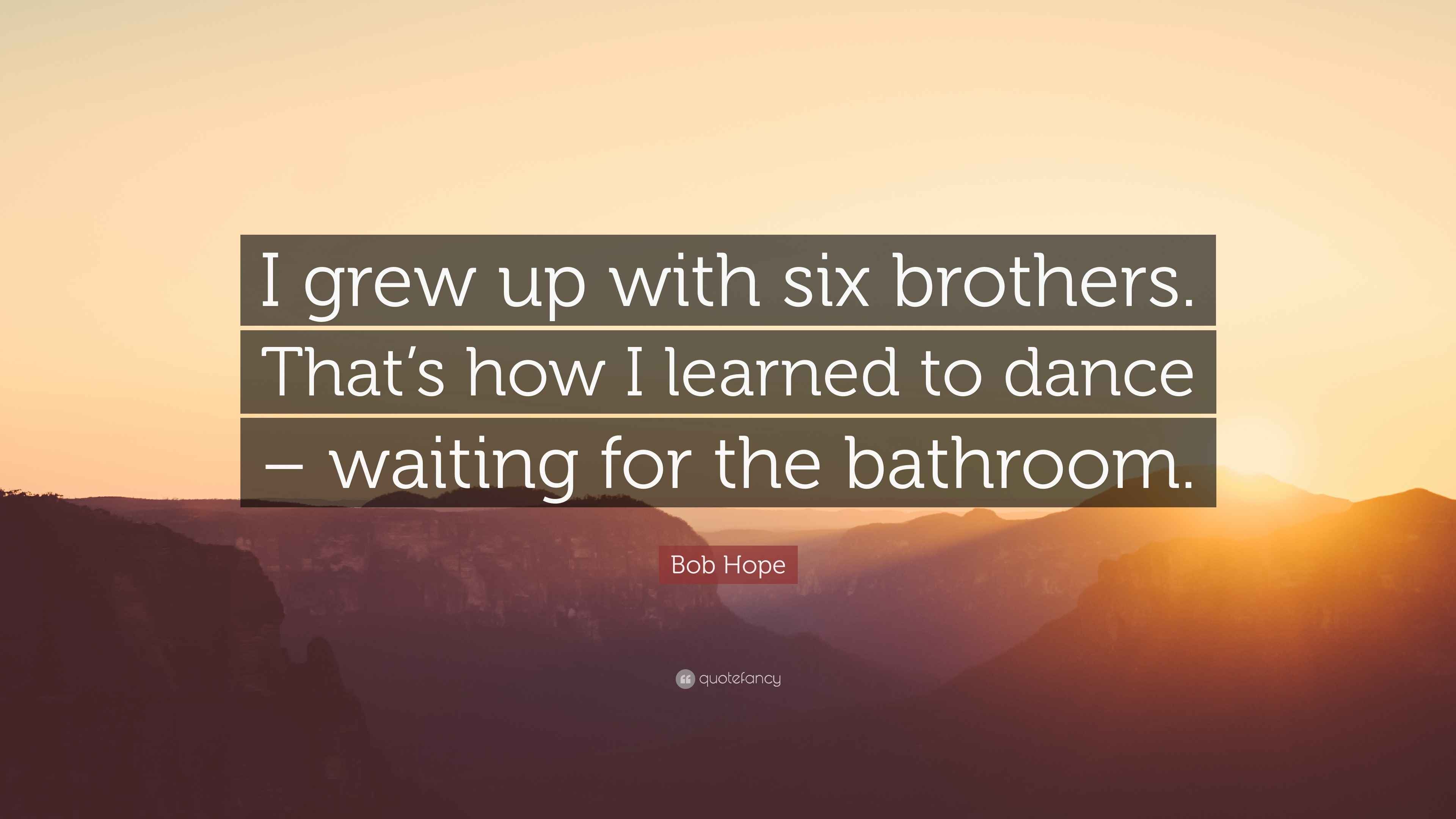
“I grew up with six brothers. That’s how I learned to dance—waiting for the bathroom.”
The joke works because it’s relatable. Anyone who’s jostled for space in a crowded home understands the subtle choreography involved. But beyond the laugh, there’s a deeper truth: conflict breeds creativity. When personal space is scarce, you learn to adapt. You develop situational awareness. You master the art of the well-timed exit—or entrance.
In large families, survival hinges on emotional intelligence. You read moods. You anticipate needs. You learn to crack a joke before a fight breaks out. Hope didn’t just learn to “dance” physically—he learned the rhythm of human interaction.
Practical takeaway: Humor isn’t just an escape from stress—it’s a tool for managing it. If you’re in a high-pressure environment (family, workplace, or otherwise), well-placed wit can defuse tension and build rapport.
Waiting as a Life Skill
The core of Hope’s joke is waiting. Not passive waiting, but active, strategic waiting—like a dancer poised between steps.
In relationships, timing is everything. Saying the right thing at the wrong moment can backfire. Pushing for resolution when someone isn’t ready only creates resistance. Hope’s bathroom line metaphor illustrates a universal truth: sometimes, progress means knowing when not to move.
Think of it like this: - In arguments, the person who pauses first often wins. - In career moves, patience can outpace hustle. - In friendships, giving space can strengthen bonds.
Hope’s upbringing taught him that life isn’t a sprint. It’s a series of calculated entries and exits. The brothers didn’t take turns because they were polite—they did it because the alternative was chaos.
Common mistake: Many people equate action with progress. But in relationships and personal growth, restraint is often more powerful than intervention. Learn to dance in place. Master the pause.
Brotherhood and the Politics of Family
Living with six brothers isn’t just about competition—it’s about micro-politics. Alliances form. Power shifts. Negotiations happen over dinner, chores, and who gets the front seat.

Hope’s joke subtly references the unspoken rules of group dynamics. In any family (or team, or social circle), there’s an invisible hierarchy. Some members dominate. Others specialize in diplomacy. Some, like Hope, become the jester—the one who disarms tension with humor.
This mirrors workplace dynamics: - The loud voice doesn’t always lead. - The peacemaker often holds the most influence. - The observer (often the comedian) sees the whole picture.
Hope’s ability to navigate brotherhood likely contributed to his decades-long success in Hollywood, where egos, contracts, and public image require constant balancing.
Realistic use case: If you’re managing a team or navigating office politics, channel Hope’s approach. Use humor to soften edges, observe before acting, and don’t always rush to claim the spotlight. Sometimes, the best move is to let others take the lead—then step in with a well-timed contribution.
Aging with Grace: Humor as a Shield
As Hope aged, his humor evolved—but never disappeared. Even in his 80s and 90s, he kept performing, cracking jokes about getting older: “I’m so old, graveyards rent space to me by the acre.”
His bathroom line joke, told early in his career, foreshadows this lifelong strategy: use laughter to disarm fear.
Aging brings loss—of energy, mobility, loved ones. But Hope’s humor softened the blow, for himself and his audience. He didn’t deny aging; he mocked it. And in doing so, he gave others permission to do the same.
The same skill he learned waiting for the bathroom—patience, timing, resilience—served him in old age. He didn’t fight time. He danced with it.
Workflow tip: As you face life’s inevitable transitions—career shifts, aging parents, personal loss—ask: How can I reframe this with humor? Not to dismiss pain, but to reduce its weight. A well-placed joke can be an act of courage.
Relationships: The Dance of Compromise
Romantic relationships thrive on the same principles Hope mastered in his boyhood home: timing, space, and mutual respect.
Consider how couples argue over: - Who does the dishes - Who controls the thermostat - Who gets first dibs on the bathroom
Sound familiar?
Hope’s joke isn’t just about siblings—it’s a metaphor for partnership. Healthy relationships aren’t about winning. They’re about rhythm. Knowing when to push, when to yield, when to crack a joke to reset the mood.
Couples who last aren’t those who never fight. They’re the ones who develop a shared dance—steps they learn through trial, error, and yes, waiting.
Practical example: Next time you’re in a disagreement, try stepping back literally. Pause. Wait. Let the tension pass. Then re-engage—not with another argument, but with a lighthearted comment. It’s not avoidance. It’s strategic timing.
Why This Quote Endures
“Quote of the day” features rotate endlessly. But lines like Hope’s stick around for a reason.
It’s concise. It’s funny. It’s true.
- But more than that—it’s layered. It works on three levels:
- Literal: A boy waits in line with his brothers.
- Emotional: He learns patience, awareness, and timing.
- Philosophical: Life itself is a series of pauses and movements.
Compare it to other famous quotes about family: - “The family is one of nature’s masterpieces.” – George Santayana - “Family is not an important thing, it’s everything.” – Michael J. Fox
These are heartfelt—but they don’t reveal how family shapes us. Hope’s line does. It shows the mechanism: daily friction, shared space, enforced patience.
That’s why it’s still shared, decades later. It doesn’t just celebrate family—it explains its power.
Bob Hope’s Legacy: More Than a Comedian
Hope wasn’t just a joke teller. He was a cultural observer.
Through USO tours, radio, film, and TV, he commented on war, politics, and social change—always with a wink. But beneath the punchlines was a man who understood human nature.
His quote about the six brothers isn’t an isolated quip. It’s a window into his philosophy: - Life is crowded. - You won’t always get your turn. - But if you stay light on your feet, you’ll survive—and maybe even enjoy the dance.
In an age of self-seriousness and viral outrage, Hope’s humor feels like a reset button. It reminds us not to take ourselves too seriously. That growth often happens in the waiting. That laughter is a form of wisdom.
How to Apply Hope’s Wisdom Today
You don’t need six brothers to benefit from this mindset. Here’s how to integrate it:
- Embrace delays – Traffic, slow replies, long lines. Use them to observe, breathe, or plan—don’t rage.
- Use humor strategically – In meetings, arguments, tough conversations. A well-timed joke disarms.
- Master the pause – Before reacting, wait two seconds. More often than not, it changes the outcome.
- See friction as training – Family dinners, group projects, roommate issues—they’re not annoyances. They’re rehearsals for life.
- Age with a punchline – As you grow older, don’t hide it. Name it, joke about it, own it.
Bob Hope didn’t just entertain America—he taught it how to move through life with grace, timing, and a smile.
Final Thought: Keep Dancing
Bob Hope’s joke about waiting for the bathroom isn’t just a throwaway line. It’s a life principle in six seconds.
We’re all waiting for something—respect, love, recognition, a free shower. The question isn’t whether we’ll wait. It’s how we’ll wait.
Will we fume? Or will we dance?
Learn the steps. Stay in rhythm. And when the moment comes—step forward with confidence, then make everyone laugh.
That’s how you survive a household of brothers. That’s how you navigate love, age, and politics. That’s how you live well.
FAQ
What did Bob Hope mean by "I learned to dance waiting for the bathroom"? He used humor to describe the constant jostling for space in a large family, highlighting how growing up with six brothers taught him timing, patience, and situational awareness.
How many siblings did Bob Hope have? Bob Hope had six brothers, making seven boys in total. He was one of the younger siblings.
Did Bob Hope have a close relationship with his brothers? While specific details are limited, Hope often referenced his brothers in jokes, suggesting a familiar, if competitive, upbringing that shaped his worldview.
Why are Bob Hope’s quotes still popular today? His humor was observational, timeless, and rooted in real-life experiences, making his quotes relatable across generations.
How did family life influence Bob Hope’s comedy? Growing up in a crowded household taught him timing, resilience, and the power of humor to ease tension—skills he used throughout his career.
What life lessons can we learn from this quote? Patience, adaptability, emotional intelligence, and the value of humor in difficult or crowded situations.
Is this quote often used in motivational contexts? Yes, it’s frequently shared as a “quote of the day” for its blend of humor and insight into perseverance, family dynamics, and personal growth.
FAQ
What should you look for in Bob Hope's Wisdom: How Six Brothers Taught Him to Dance? Focus on relevance, practical value, and how well the solution matches real user intent.
Is Bob Hope's Wisdom: How Six Brothers Taught Him to Dance suitable for beginners? That depends on the workflow, but a clear step-by-step approach usually makes it easier to start.
How do you compare options around Bob Hope's Wisdom: How Six Brothers Taught Him to Dance? Compare features, trust signals, limitations, pricing, and ease of implementation.
What mistakes should you avoid? Avoid generic choices, weak validation, and decisions based only on marketing claims.
What is the next best step? Shortlist the most relevant options, validate them quickly, and refine from real-world results.