
Humor that endures does more than make us laugh—it reveals truth through timing, perspective, and a wink. Few mastered this balance like Bob Hope, the iconic American entertainer whose decades-spanning career in film, radio, and television made him a household name. But beyond the punchlines and USO tours, Hope often distilled life’s complexities into sharp, memorable one-liners. One such gem: “I grew up with six brothers. That’s how I learned to dance—waiting for the bathroom.”
On the surface, it’s a classic setup: self-deprecating, absurd, rooted in everyday frustration. But peel back the layers, and this quote becomes a lens into broader truths about relationships, the passage of time, and navigating social dynamics—themes Hope revisited throughout his life and career.
Let’s unpack how a simple joke about bathroom queues in a crowded household carries surprisingly deep insights into human behavior, resilience, and the subtle art of getting along.
The Humor in Household Chaos
Growing up in a family of seven boys wasn’t just challenging—it was comedic gold in the making. Born in 1903 in London and raised in Cleveland, Ohio, Leslie Townes “Bob” Hope was the fifth of seven sons. The chaos of that upbringing didn’t just shape his personality; it fueled his comedic voice.
The quote about dancing while waiting for the bathroom works because it’s specifically absurd yet universally relatable. Who hasn’t stood in a domestic traffic jam, tapping their foot, waiting their turn? But by reframing impatience as “dancing,” Hope transforms irritation into rhythm. It’s not just coping—it’s performing.
This kind of reframe is a cornerstone of psychological resilience. Instead of lamenting lack of privacy or personal space, Hope jokes his way into agency. He didn’t just endure—he adapted, entertained, and emerged with material.
In real life, families with multiple siblings often develop similar coping mechanisms. A 2020 study in Personality and Social Psychology Bulletin found that individuals from larger families tend to score higher on adaptability and conflict negotiation. They learn early: you don’t always get what you want, and timing matters.
Hope’s joke isn’t just nostalgia. It’s a masterclass in turning constraint into creativity.
Sibling Rivalry as a Social Training Ground
Living with six brothers wasn’t merely about shared bathrooms—it was a daily crash course in social dynamics. From negotiating bedtime schedules to avoiding blame for broken lamps, Hope’s formative years were steeped in high-stakes interpersonal strategy.
Consider the unspoken rules of a crowded home: - You learn to read body language before speech. - You master timing—when to speak, when to retreat. - You develop a sense of humor as armor and currency.
These are the same skills required in adult relationships—romantic, professional, political.
Hope’s career thrived on timing and emotional intelligence. Whether delivering a monologue to presidents or calming troops overseas, he understood audience, tension, and release. That instinct wasn’t learned in showbiz—it was forged at home.
Take a common scenario: two brothers reach for the last pancake. The fight isn’t about food. It’s about fairness, attention, status. Sound familiar? Substitute “promotion” for “pancake,” and you’re in the office. Replace “parents” with “voters,” and you’re in politics.
Hope’s joke about dancing while waiting subtly acknowledges that life, like a family bathroom, is about turns. Patience. Strategy. Humor helps you endure the wait—and come out smiling.
How Humor Shapes Relationship Intelligence
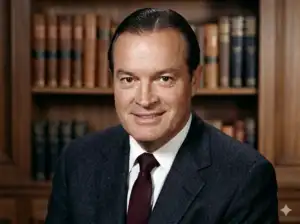
Hope’s legacy isn’t just in laughs—it’s in how he used humor to navigate connection. His quote isn’t merely observational; it’s relational. It invites the listener into shared experience, saying, “You know this, too.”
That’s the power of self-deprecating humor: it builds trust. By poking fun at his own childhood frustration, Hope disarms. He’s not bragging about resilience; he’s saying, “Life was messy, and I survived with a joke.”
In relationships—romantic or otherwise—this kind of humor is a stabilizer. Research from the University of Kansas shows that couples who use affiliative humor (joking together, not at each other) report higher relationship satisfaction. It reduces tension, increases bonding, and fosters emotional safety.
Hope’s bathroom line does exactly that. It’s affiliative. It doesn’t mock his brothers; it celebrates their collective absurdity. There’s no villain in the story—just a bunch of kids figuring it out.
Contrast this with aggressive humor (“My brothers were animals”) or self-put-downs (“I was the weakest, so I waited longest”). Hope avoids both. His tone is observational, wry, inclusive.
That emotional calibration is rare—and valuable. In an age where online discourse often devolves into blame and outrage, Hope’s approach feels like a corrective: laugh at the situation, not the people.
Aging Gracefully Through Laughter
Hope lived to 100, a feat as much about mindset as genetics. And through decades of cultural shifts—from vaudeville to television to digital media—he remained relevant, in part, because he refused to take himself too seriously.
The quote about dancing in the hallway isn’t just about youth. It’s a metaphor for aging: life keeps moving. You wait your turn. You stay light on your feet.
Many struggle with aging because it feels like loss—of control, of speed, of relevance. But Hope’s humor reframes it. Waiting isn’t passive. Dancing is active. Even in constraint, there’s movement, rhythm, possibility.
Consider his later years. Even as his film career slowed, he remained a presence through charity work, public appearances, and quips about retirement. When asked about growing older, he once said, “I’m so old, when I got my driver’s license, Moses was my instructor.”
Again, the pattern: use humor to reframe limitation. Don’t deny aging—dance with it.
For those navigating middle or later life, this mindset is practical. Instead of resisting change, find the rhythm in it. Use humor not to deflect pain, but to keep moving.
Hope didn’t just tell jokes. He lived by them.
Politics and Patience: The Long Game of Influence
Hope’s influence extended far beyond entertainment. He was a political fixture, performing for eight U.S. presidents and shaping public sentiment during wartime. His USO tours became legendary, offering levity to soldiers in Vietnam, Korea, and the Middle East.
Here, the bathroom joke gains new resonance. Waiting your turn isn’t just a family rule—it’s a political one.
In politics, timing is everything. Rushing in too soon gets you burned. Waiting too long, you miss the moment. Hope understood this. He never ran for office, but he knew how to work a room—whether it was a bunker in Baghdad or a fundraiser in D.C.
His humor was rarely partisan. Instead, it was observational, gently poking at institutions without alienating audiences. He could mock bureaucracy while honoring service. That balance required emotional intelligence—and patience.
The man who learned to dance while waiting for the bathroom became a master of the long game. He didn’t force his way in. He waited, stayed ready, and stepped forward when the rhythm allowed.
In today’s hyper-polarized climate, where outrage drives engagement, Hope’s model offers an alternative: influence through warmth, not force. Build trust. Time your message. Stay in step.
The Lasting Power of a Well-Timed Line
Bob Hope’s bathroom joke endures because it’s more than a quip—it’s a philosophy wrapped in rhythm.
It teaches us: - Adaptability in crowded, unpredictable environments. - Patience as a form of emotional strength. - Humor as a tool for connection, not escape. - Timing as a skill worth refining.
You don’t need six brothers to apply this. You just need to recognize that life is often a hallway full of people waiting for their turn. The question isn’t whether you’ll wait—it’s how you’ll spend that time.
Will you fume? Or will you dance?
Hope’s answer was clear. And in that clarity lies a lesson for relationships, aging, and the messy, beautiful challenge of getting along.
Practical Takeaways from Hope’s Wisdom
You don’t have to be a comedian to use these insights. Here’s how to apply them in real life:
- In relationships: When tension rises, pause. Ask: Can I reframe this as absurd? Often, a shared laugh dissolves conflict faster than debate.
- At work: You can’t always control outcomes. But you can control your demeanor. Stay ready. Stay light. Step in when the timing is right.
- With aging: Don’t measure worth by speed or output. Measure it by resilience and humor. What stories can you tell?
- In social dynamics: Observe before reacting. Hope didn’t win by shouting—he won by listening, timing, and delivering.
Hope’s life wasn’t perfect. He faced criticism, professional slumps, and personal complexities. But his humor remained a constant—not as denial, but as navigation.
Final Thought: Keep Dancing
Bob Hope’s quote about growing up with six brothers is more than a throwaway line. It’s a micro-lesson in how to live—patiently, wittily, in step with the chaos around you.
You won’t always get the bathroom first. You won’t always get the spotlight. But if you learn to dance while you wait, you’ll never be standing still.
That’s not just comedy. It’s wisdom.
FAQ
What did Bob Hope mean by "I learned to dance waiting for the bathroom"? He was humorously describing the chaos of growing up with six brothers, turning a frustrating experience into a metaphor for patience and adaptability.
How many brothers did Bob Hope have? Bob Hope had six brothers, making seven boys total in his family.
Did Bob Hope have a close relationship with his siblings? While private about family life, Hope often referenced his brothers in jokes, suggesting a mix of rivalry and camaraderie shaped by shared upbringing.
How did Bob Hope’s childhood influence his comedy? His early life in a crowded household taught him timing, observation, and resilience—skills that became foundational to his comedic style.
What life lessons can we learn from Bob Hope’s humor? Patience, emotional intelligence, using humor to defuse tension, and adapting to constraints with grace.
Why are Bob Hope’s quotes still relevant today? They capture universal human experiences—family, aging, politics—with wit and warmth, offering timeless perspective.
How can I use humor like Bob Hope in everyday life? Focus on observational, self-deprecating humor that unites rather than divides. Laugh at situations, not people.
FAQ
What should you look for in Bob Hope's Quote on Brothers and Life Lessons Explained? Focus on relevance, practical value, and how well the solution matches real user intent.
Is Bob Hope's Quote on Brothers and Life Lessons Explained suitable for beginners? That depends on the workflow, but a clear step-by-step approach usually makes it easier to start.
How do you compare options around Bob Hope's Quote on Brothers and Life Lessons Explained? Compare features, trust signals, limitations, pricing, and ease of implementation.
What mistakes should you avoid? Avoid generic choices, weak validation, and decisions based only on marketing claims.
What is the next best step? Shortlist the most relevant options, validate them quickly, and refine from real-world results.