
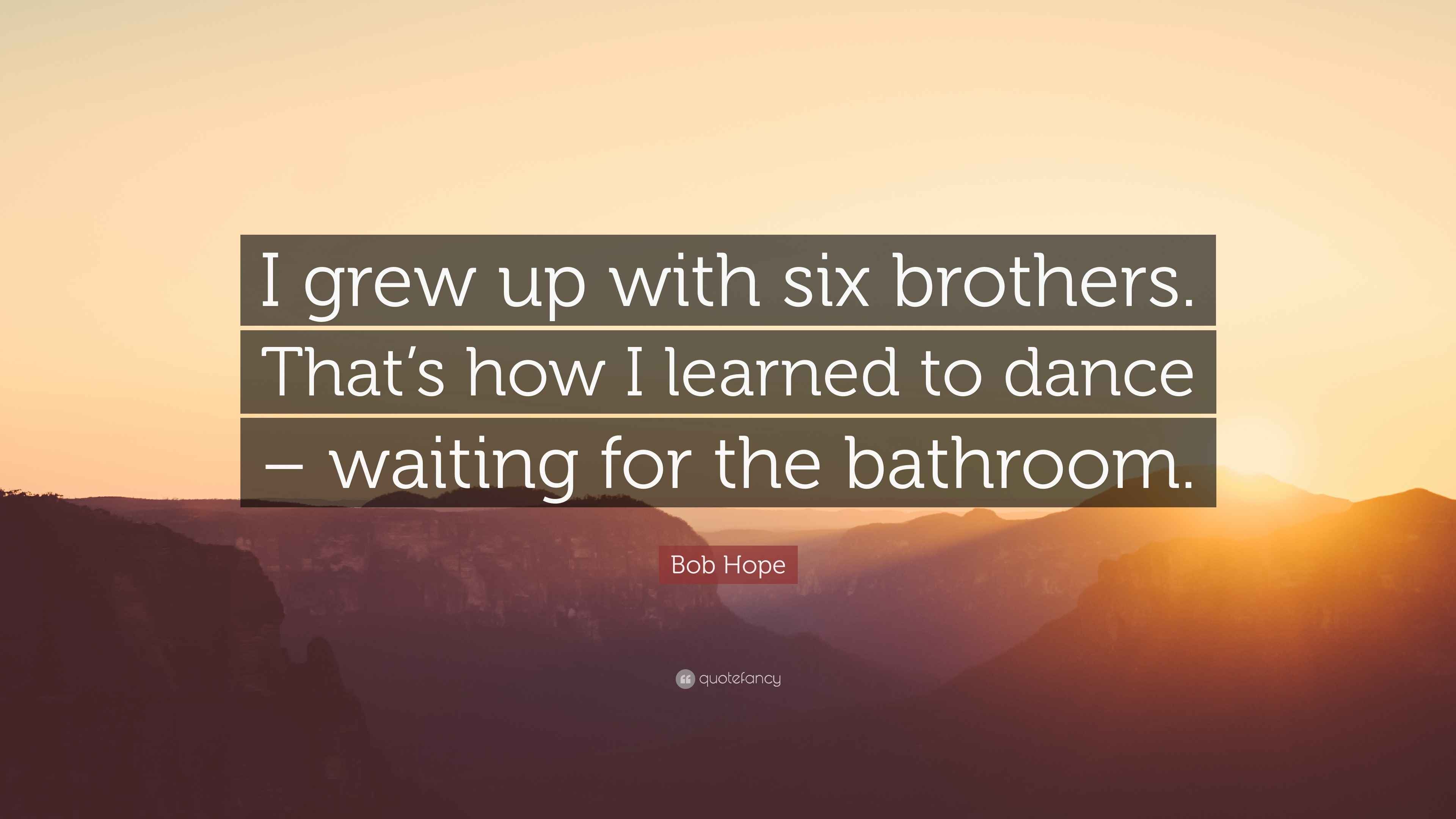
Humor isn’t just entertainment—it’s survival. Few understood that better than Bob Hope, the legendary American comic and entertainer whose quick wit lit up stages, radio waves, and television screens for over six decades. When he said, “I grew up with six brothers. That’s how I learned to dance—waiting,” he wasn’t just delivering a punchline. He was distilling a lifetime of insight into family, timing, resilience, and human connection.
That single line—often shared today as a “quote of the day”—holds layers. On the surface, it’s a laugh about overcrowded bathrooms. But beneath, it reveals how early experiences shape emotional intelligence, communication styles, and even political perspective. This is not just nostalgia. It’s a masterclass in navigating life’s crowded spaces—literal and metaphorical—without stepping on toes.
Let’s unpack what Bob Hope really meant—and why his words still resonate in how we handle relationships, age with humor, and engage in politics today.
The Family Crucible: Where Humor Becomes a Survival Skill
Growing up in a household with six brothers wasn’t just noisy—it was a constant negotiation of space, attention, and survival. For Bob Hope, born Leslie Townes Hope in 1903 to English immigrants in Cleveland, Ohio, life at home was chaotic. With limited resources and even less personal room, humor wasn’t a performance choice. It was armor.
In cramped conditions, conflict is inevitable. But sarcasm, wit, and timing allowed Hope to deflect tension, gain favor, and rise above the fray. Learning to “dance while waiting” wasn’t about literal movement; it was about mastering patience with a punchline. That ability to stay light-footed amid pressure became his trademark.
Real-life parallel: Consider a modern family with multiple siblings sharing a small apartment. The child who cracks jokes during sibling squabbles often becomes the peacemaker—not because they solve the issue, but because they shift the energy. That’s emotional agility. Bob Hope didn’t just survive his upbringing—he refined it into a life philosophy.
Dance as Metaphor: Timing, Grace, and Anticipation
The word “dance” in Hope’s quote is deliberate. Dancing requires rhythm, awareness of others, and precise timing—all skills vital in relationships.
- In romance, dancing mirrors communication. Missteps happen, but recovery is everything. Hope’s ability to “dance” while waiting suggests he learned early how to read the room, anticipate moves, and respond with flair.
- In conflict, dancing means not charging forward. It’s about sidestepping aggression, using humor to defuse, and knowing when to lead versus follow.
- In professional life, especially in comedy and entertainment, timing is non-negotiable. A joke delivered a second too early or too late falls flat. Hope’s household trained him in micro-timing—the split-second decisions that define social success.
Workplace example: A manager facing a tense team meeting might use a well-placed, self-deprecating joke to ease tension—just as Hope would have. The goal isn’t laughter for its own sake, but to reset the emotional temperature.
This cultivated sensitivity to rhythm helped Hope navigate decades in the spotlight, where one misstep could end a career. But he rarely slipped, because he’d spent a lifetime learning how to move without tripping.
Humor as a Bridge in Relationships
Hope’s relationships—both personal and public—were built on accessibility. He wasn’t a distant star; he was the guy who made fun of authority, bureaucracy, and himself. That relatability came from his upbringing.
With six brothers, ego had no room to grow. You were either funny, forgotten, or a target. Humor became currency—something you traded for attention, respect, or a few extra minutes in the bathroom.
This shaped his approach to marriage and friendship. His 69-year marriage to Dolores Hope was unusually stable for a Hollywood figure. While fame often fractures personal lives, Hope’s grounding in family chaos may have inoculated him against the fragility of ego.
Common mistake: Many people use humor to avoid emotional depth. But Hope’s comedy didn’t mask vulnerability—it revealed it. When he joked about waiting, he was acknowledging shared struggle. That’s the difference between defensive sarcasm and connective wit.
Use case: In long-term relationships, couples who laugh together weather stress better. A couple stuck in traffic might groan—or one might say, “Well, at least we’re not seven brothers waiting for one bathroom.” Suddenly, frustration becomes shared story. That’s Hope’s legacy: turning inconvenience into intimacy.
Aging with Laughter: Defying Dignity Without Losing Respect
Bob Hope performed well into his 80s and 90s. His last USO tour was at age 86. That longevity wasn’t just physical—it was psychological. He refused to treat age as decline.
His quote about dancing while waiting reflects a core truth: aging is often about waiting. Waiting for appointments, for responses, for recognition, for relevance. Hope’s genius was in treating waiting not as passive suffering, but as part of the performance.
Modern application: Today’s aging population faces invisibility. But those who adopt Hope’s mindset reframe delay as opportunity. A retiree waiting for a grandchild’s call might leave a goofy voicemail. A senior in a long pharmacy line might strike up a joke with the person behind them.
Hope understood that dignity doesn’t require solemnity. You can age gracefully while still being the guy who cracks a joke about hearing aids: “I don’t need a hearing aid. I can hear everything I want to—and ignore the rest.”
That’s the power of lifelong humor: it turns indignity into agency.
Politics and Punchlines: Comedy as Social Commentary
Hope didn’t shy from politics. He performed for every U.S. president from Franklin D. Roosevelt to Bill Clinton. His monologues at White House dinners were legendary—not just for their humor, but for their bite.
But his political comedy was never cruel. It was corrective. Much like his childhood dynamic, he used humor to challenge power without destroying it. He could roast a president but still stand beside him on a USO stage.
His experience with six brothers taught him hierarchy—and how to navigate it. In any group of siblings, there’s dominance, alliances, and shifting power. Hope learned early how to challenge authority with a wink, not a war cry.
Today’s lesson: In an era of polarized politics, we’ve lost the art of laughing at power without hating it. Hope’s comedy offered a middle path—holding leaders accountable while preserving national unity.
Example: A modern comedian might mock a policy without dehumanizing the policymaker. That balance is rare today. But Hope proved it’s possible—and effective.
The Waiting Game: Why Patience Needs a Beat
We’re all waiting—for replies, for results, for love, for justice. But waiting without purpose breeds resentment. Hope’s life teaches us to fill those gaps with rhythm.
“Learning to dance while waiting” is a philosophy for modern life:
- In relationships, it means not pressuring your partner for answers, but staying emotionally present.
- At work, it’s about using downtime to refine your craft, not stew in frustration.
- In activism, it’s continuing the fight even when change feels slow.
Hope didn’t just wait for his turn. He practiced his moves. That’s how he stayed relevant for generations.
The Enduring Relevance of a One-Liner
Bob Hope’s quote about growing up with six brothers seems light—but it’s a distillation of wisdom earned through decades of social navigation. It speaks to:
- Family dynamics as emotional training grounds
- Humor as a tool for resilience
- Timing as a form of emotional intelligence
- Aging as a stage, not a sidelining
- Politics as a shared human comedy
In a world that often takes itself too seriously, Hope reminds us: you can endure anything if you can laugh while you wait.
His life wasn’t perfect. His career faced criticism. His personal views evolved—sometimes slowly. But his ability to keep dancing, even as the world changed around him, is a lesson in adaptability.
Close with Movement, Not Stillness
Don’t just wait for life to hand you space. Dance in the line. Use humor to lighten the load. Practice patience with purpose. Bob Hope didn’t rise because he was the loudest—he rose because he knew when to speak, when to pause, and when to deflect with a grin.
Take one lesson from the man who learned comedy in a crowded house: Your timing is your power. Whether you’re navigating a relationship, a career, or a political moment, stay light on your feet. The next opening may come faster if you’re already moving.
FAQ
What should you look for in Bob Hope's Life Lesson: How Six Brothers Taught Him to Dance? Focus on relevance, practical value, and how well the solution matches real user intent.
Is Bob Hope's Life Lesson: How Six Brothers Taught Him to Dance suitable for beginners? That depends on the workflow, but a clear step-by-step approach usually makes it easier to start.
How do you compare options around Bob Hope's Life Lesson: How Six Brothers Taught Him to Dance? Compare features, trust signals, limitations, pricing, and ease of implementation.
What mistakes should you avoid? Avoid generic choices, weak validation, and decisions based only on marketing claims.
What is the next best step? Shortlist the most relevant options, validate them quickly, and refine from real-world results.